






Home » Resources » News & Insights » Posters » SPK-10001 Induces a Durable and Safe Reduction of HTT Protein Supporting Further Development in Huntington’s Disease
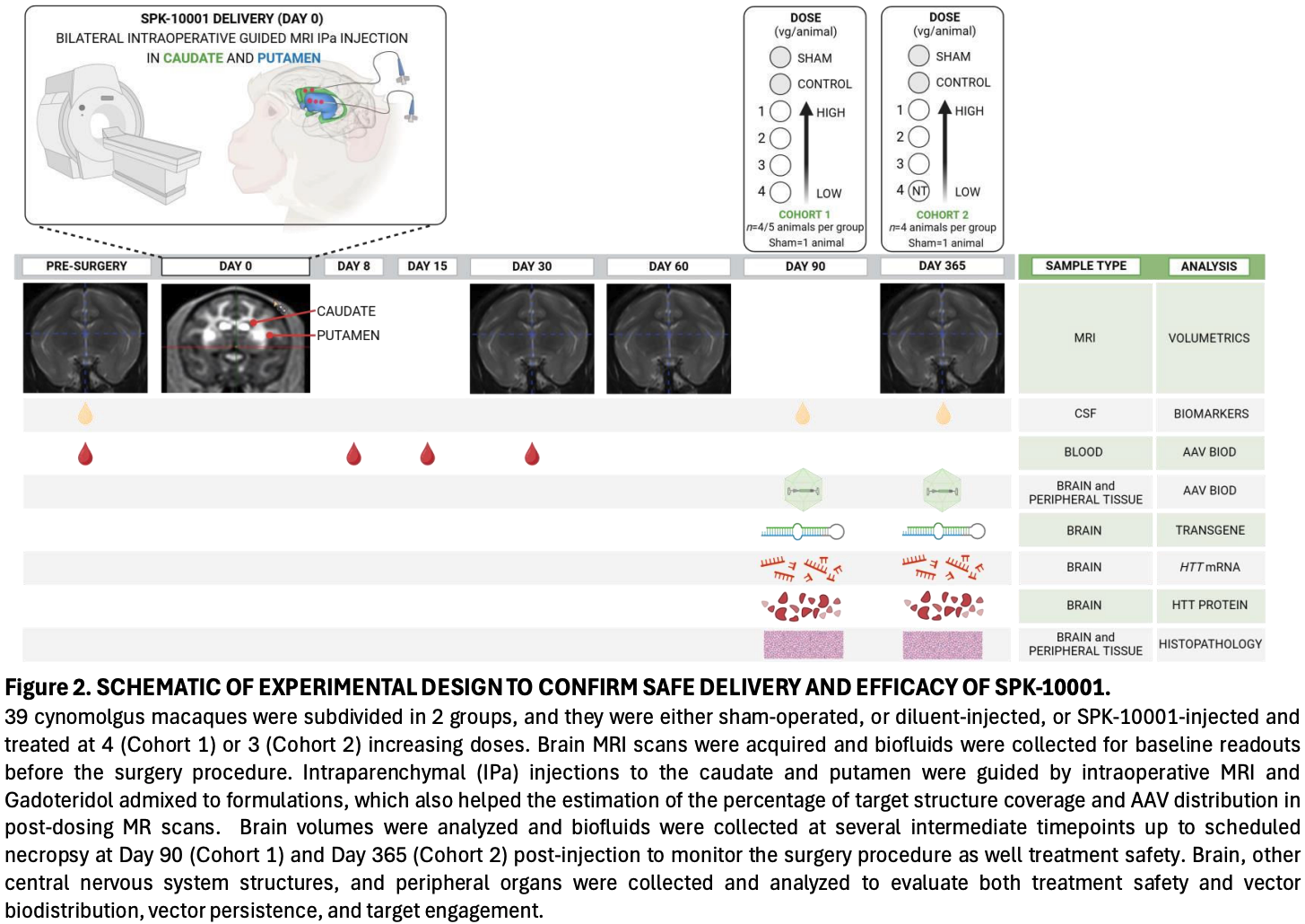
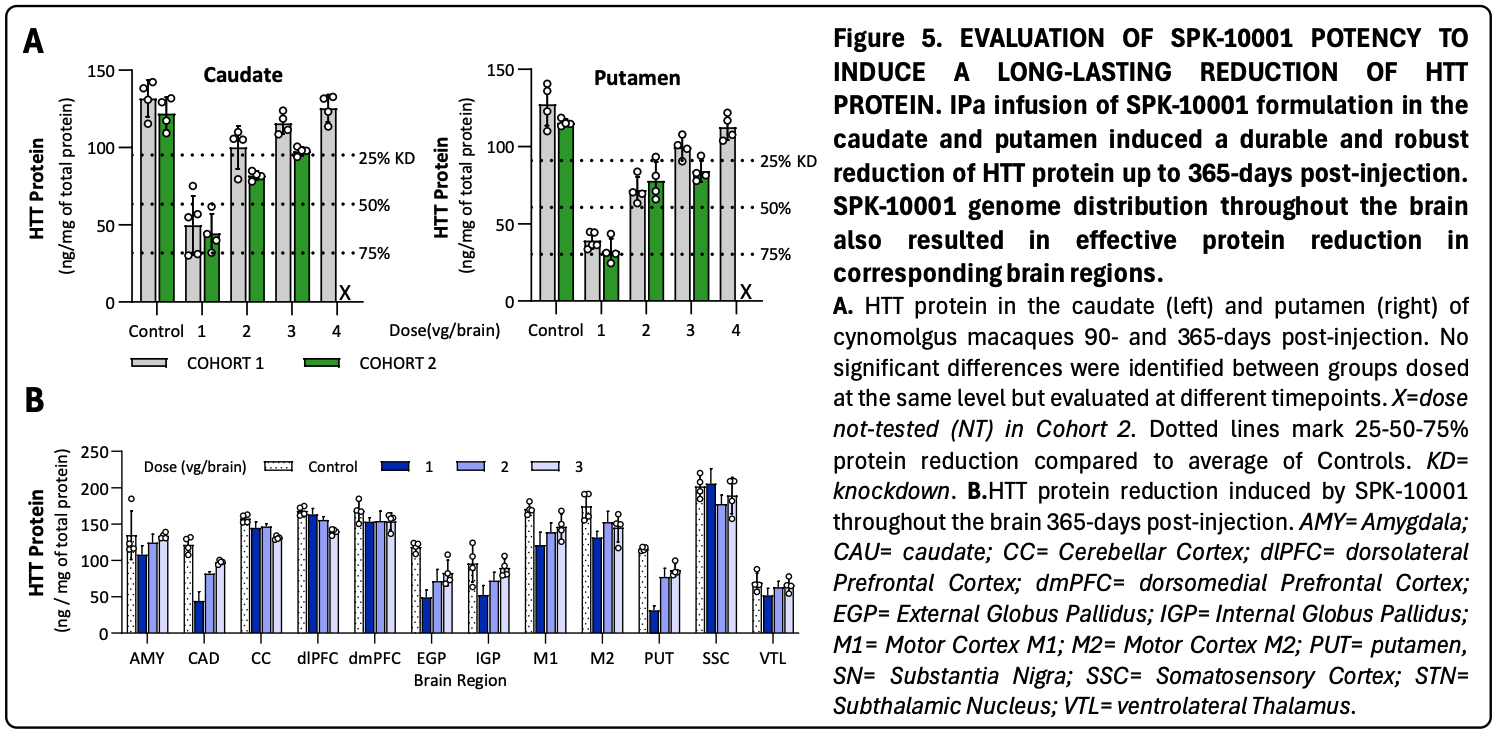
This poster reports the long-term safety and durability data for SPK-10001 in cynomolgus macaques. Using bilateral, MRI-guided infusion into the brain parenchyma, the study tracked HTT protein reduction across a range of doses for twelve months.
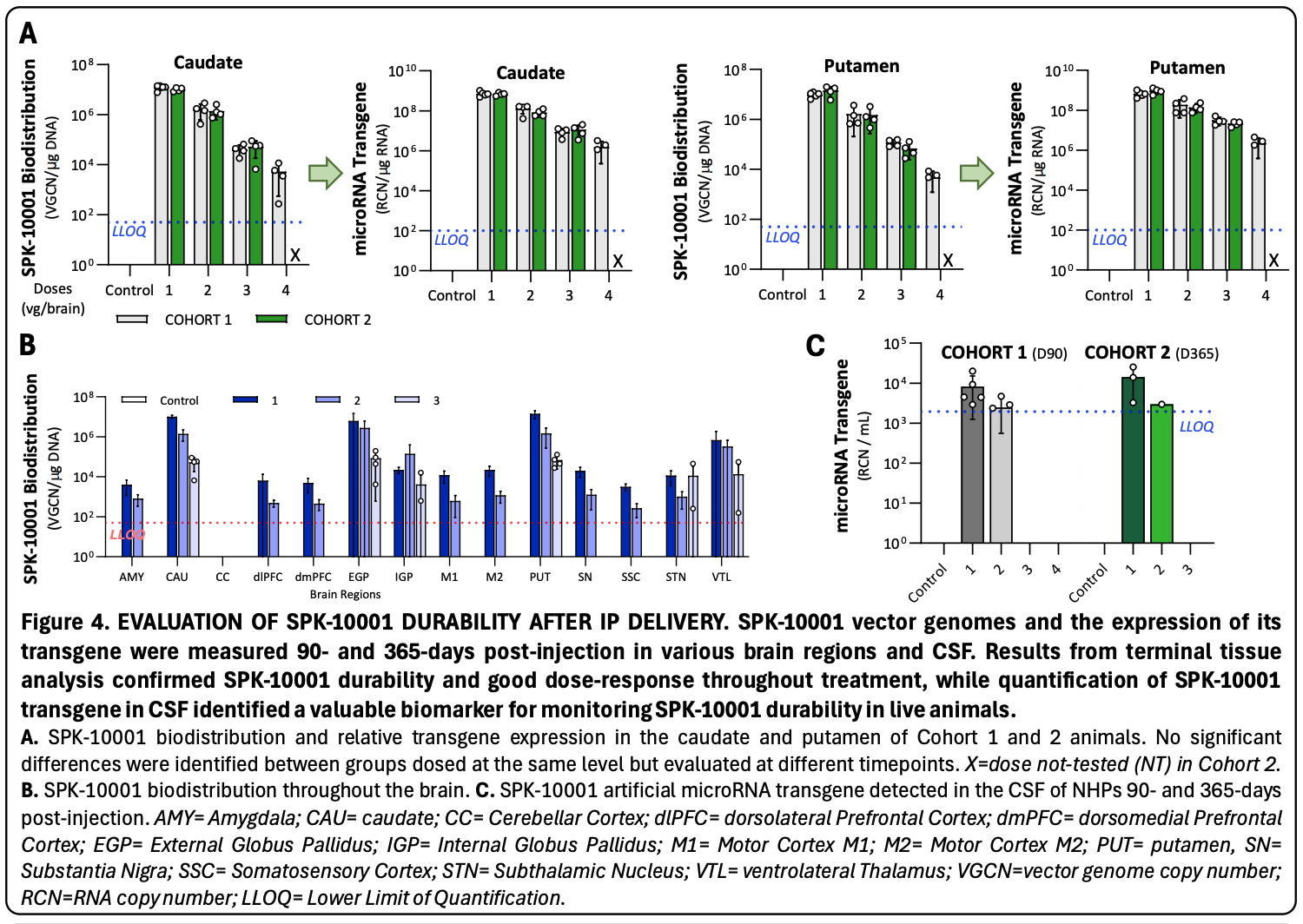
Higher doses produced longer-lasting knockdown, and the therapy’s genetic material stayed detectable in cerebrospinal fluid, a marker the team used as a stand-in for durability. Imaging showed surgery-related injuries resolved within two months, and CSF protein levels along with tissue analysis pointed to minimal lasting neuronal damage.
Together, the safety and durability picture supports moving SPK-10001 forward in Huntington’s disease development.
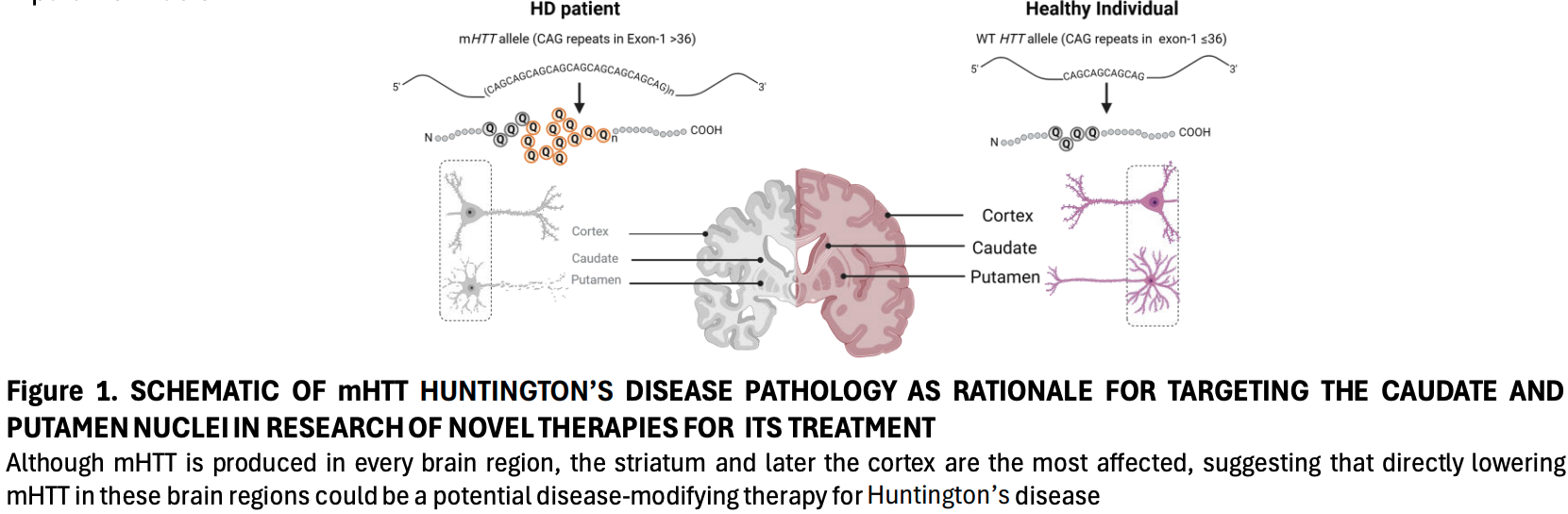
SPK-10001, an AAV-based gene therapy for Huntington’s disease (HD), targets Huntingtin protein (HTT) accumulation in the brain’s basal ganglia. Administered via bilateral intraparenchymal (IP) infusion using MRIguided ClearPoint SmartFlow cannula, SPK-10001 aims for a durable, dose-dependent reduction of HTT protein while minimizing brain tissue disruption and ensuring neuronal tolerance.
In cynomolgus macaques, increasing doses of SPK-10001 demonstrated lasting HTT reduction and safety over 12 months, with detectable transgene in the cerebrospinal fluid (CSF) serving as a durability biomarker. MRI scans showed resolution of surgery-related injuries within two months post-injection, while CSF protein analysis and histopathology confirmed minimal neuronal damage. Overall, SPK-10001’s preclinical data support its further development for Huntington’s disease.