


Improve Cardiovascular Health With Us
Advance Cardiac Therapeutics
Consult a Scientist
We are a team of scientists who value open communication and collaboration. We work closely with our sponsors to provide customized solutions and expert support.
Targeted Delivery
Instrumentation & Capabilities
Equipment
MRI – Philips 3T
Philips Intellispace Image Analysis
2 GE OEC9900 Cardiac Fluoroscope
Philips CVx ultrasound
Include 3D probes for automated strain and heart structure analysis
Visualsonics Vevo
Jacketed and Implantable Telemetry
Cardiac Injury Models
Acute Myocardial Infarction (Ischemia-Reperfusion Injury)
Congestive Heart Failure
Critical Limb Ischemia
Peripheral Artery Disease/Atherosclerosis
HFpEF
Routes of Administration
Epicardial
Endocardial
Retrograde Coronary Sinus
Coronary Artery Delivery
Intravenous
Intra-arterial
Species
Mouse
Rat
Rabbit
Canine
NHP
Swine
Sheep
Frequently Asked Questions (FAQs) about Cardiovascular
What species of animals are most commonly used to assess cardiovascular therapeutics?
NorthernBio supports all of the most common species of animals when assessing cardiovascular therapeutics. While not limited to these, the most common species utilized for these studies are rodents, canines, swine, and nonhuman primates.
How is catheter-based cardiac delivery performed in preclinical studies?
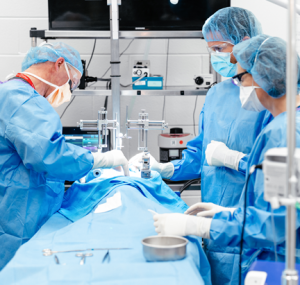
NorthernBio performs catheter-based endocardial delivery, retrograde coronary sinus infusion, and direct coronary artery dosing under live fluoroscopy on GE OEC9900 systems, allowing real-time confirmation of catheter position. Epicardial injection is also available when the clinical procedure calls for direct access to the heart surface.
What animal models are used for myocardial infarction research?
NorthernBio’s most commonly requested cardiac injury model is acute myocardial infarction induced by ischemia-reperfusion, particularly in swine and other large animal species. We also support models of congestive heart failure and HFpEF, as well as vascular disease models including critical limb ischemia, peripheral artery disease, and atherosclerosis. These models can be paired with cardiac imaging, biomarkers, hemodynamic assessments, and telemetry endpoints.
How is cardiac telemetry collected in conscious animals?
NorthernBio uses both jacketed external telemetry and surgically implanted telemetry to record ECG, blood pressure, and heart rate in conscious animals. Implanted systems suit longer studies where you need continuous cardiovascular data without handling stress affecting the readings.
What cardiac imaging endpoints are available for preclinical studies?
NorthernBio uses a Philips CVx ultrasound with 3D probes for automated strain and cardiac structural and functional assessment, VisualSonics Vevo for small animal echocardiography, cardiac fluoroscopy, and a Philips 3T MRI with Intellispace analysis. Together these cover ejection fraction, strain, wall motion, chamber dimensions, and vascular anatomy.
Where does NorthernBio run large animal cardiovascular studies?
NorthernBio performs large animal cardiac work at our Muskegon, Michigan facility, which was purpose-built for complex targeted delivery procedures that mimic clinical practice. It sits in West Michigan near Grand Rapids, and sponsors frequently visit for surgery and dosing days.
Partner With Us
Let’s work together to develop
life-changing treatments.
Join us in the pursuit of better lives through scientific innovation. Explore how NorthernBio can help you achieve your research goals.