




Home » Resources » News & Insights » Posters » Discovery of a Novel C3-Targeting and CNS Active siRNA as a Potential Therapeutic for Alzheimer’s Disease
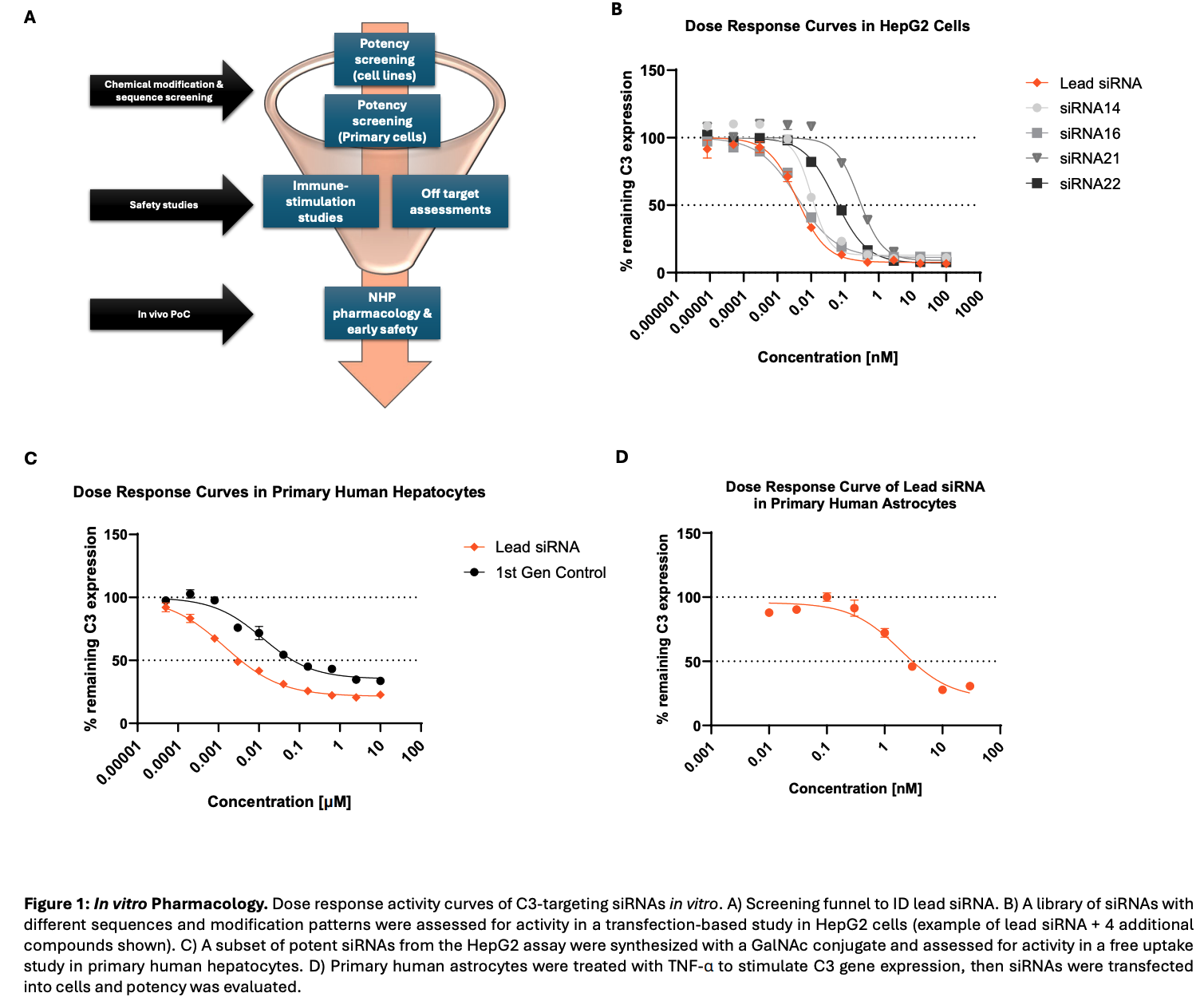
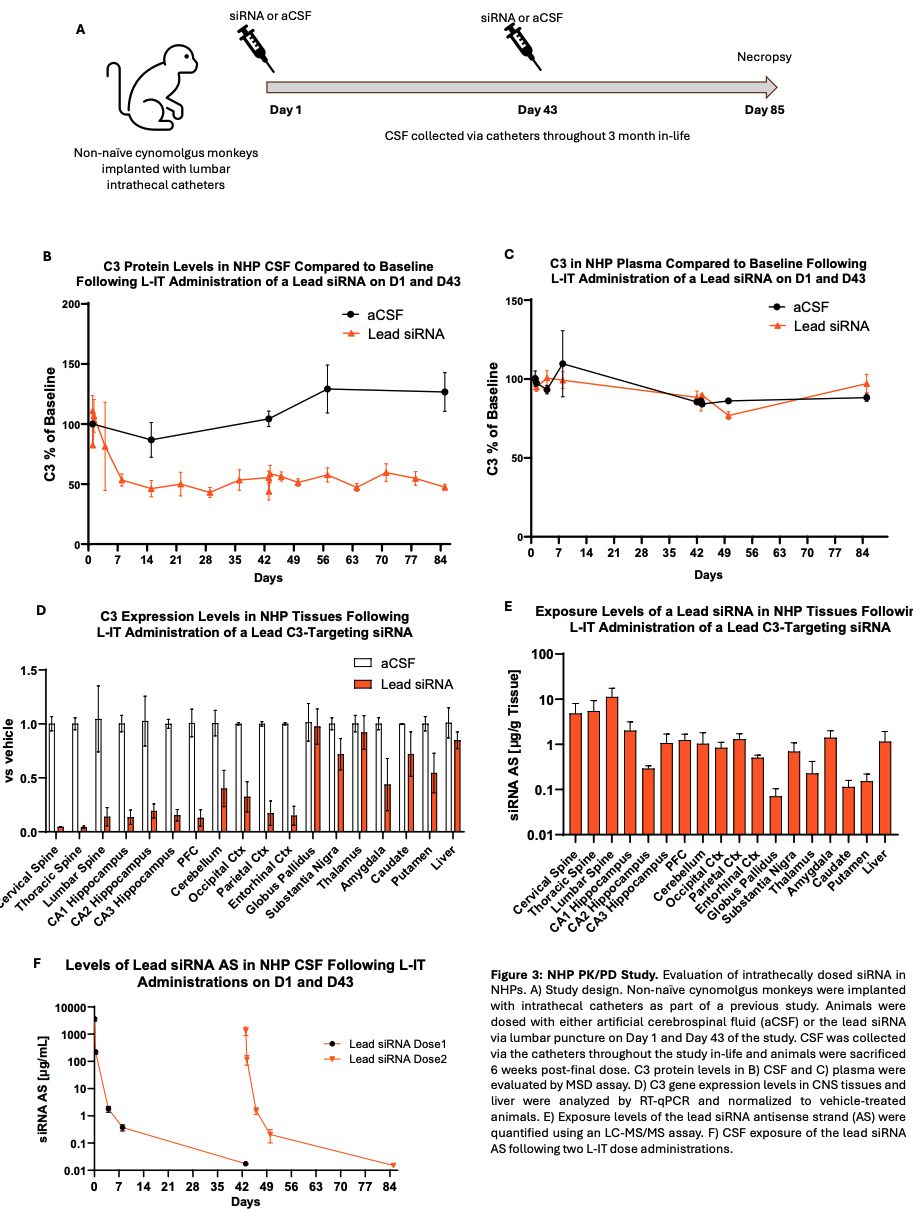
Complement protein C3 drives neuroinflammation in Alzheimer’s disease, which makes it an attractive drug target if the therapy can reach it inside the CNS. This poster describes a screening effort that landed on a lead siRNA, potent against C3 in human cells and effective at silencing C3 in Alzheimer’s-relevant brain regions of non-human primates after intrathecal dosing.
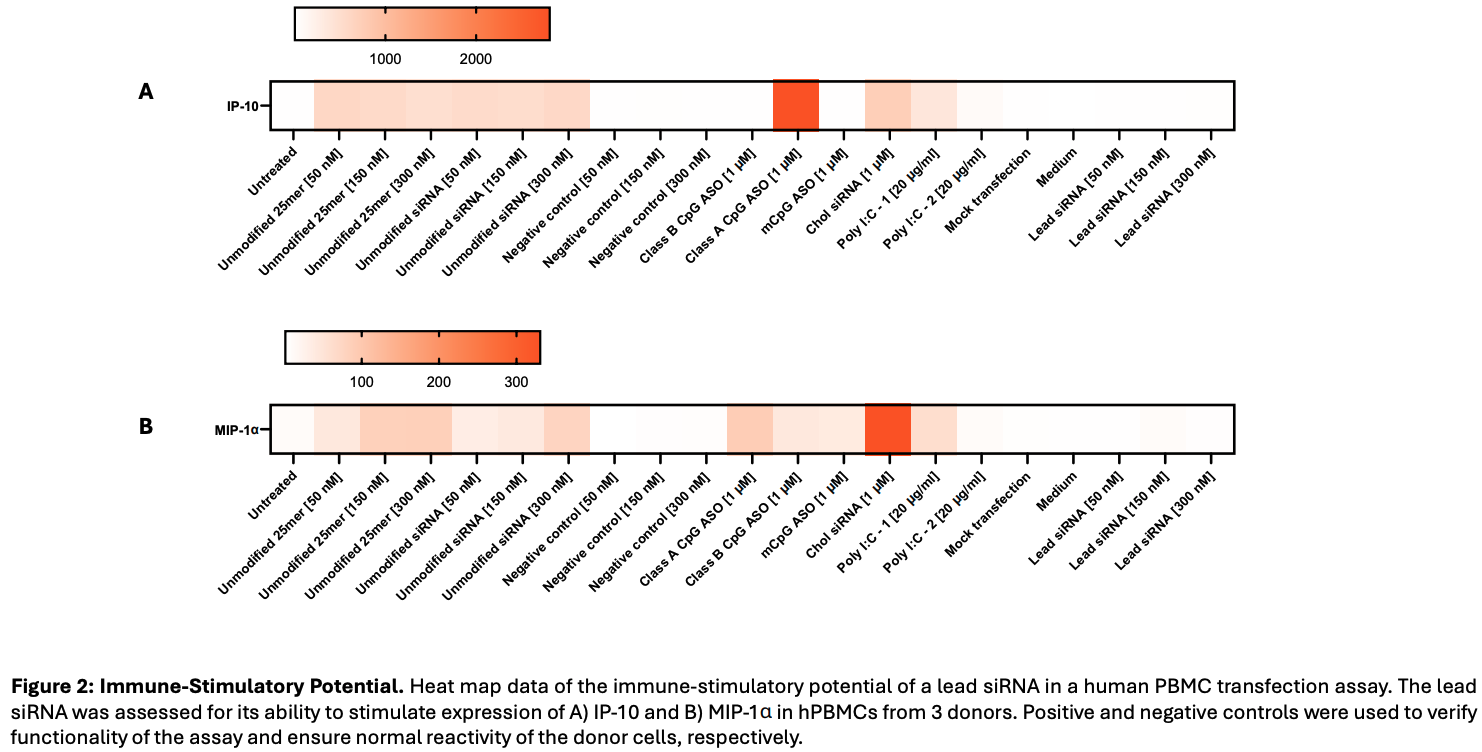
The molecule spread well across CNS tissue, knocked down C3 durably, and showed a low immune response.
Those results build the case for CNS-active siRNAs as a therapeutic route for Alzheimer’s and other neurodegenerative diseases.
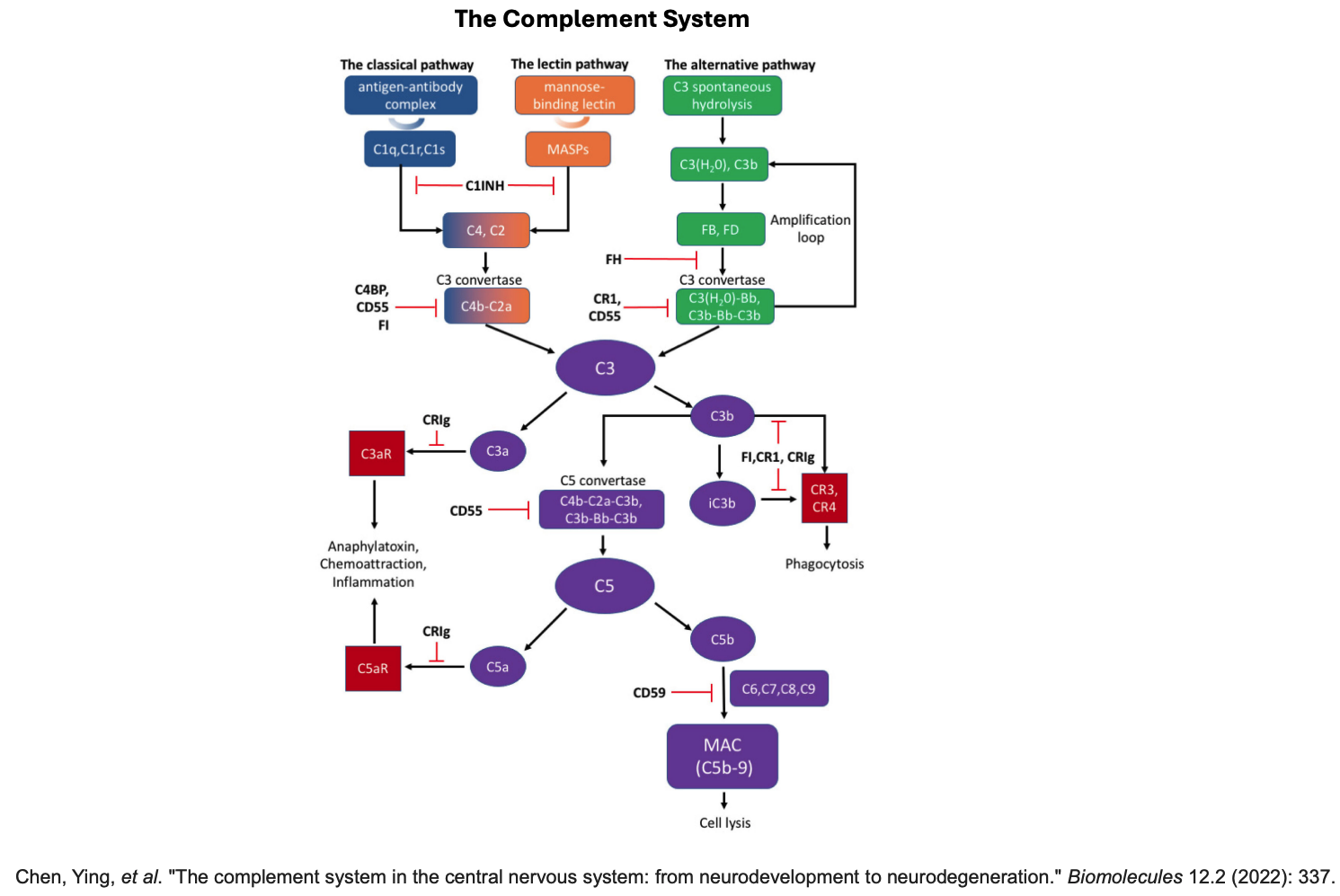
Complement proteins are key modulators of innate immunity involved in defense against pathogens. The central component, C3, is an attractive therapeutic target for Alzheimer’s disease (AD), due to its location at the nexus of the 3 known activation pathways, and key roles in neuroinflammation and synaptic pruning. C3 mRNA is elevated
in post-mortem AD brains and correlates with Braak staging, C3 protein and its breakdown products are elevated in AD patient CSF, and C3 gene knockdown in aging, amyloid or tauopathy mouse models is synaptoprotective and attenuates measures of cognitive decline.
Small interfering (si)RNAs drive post-transcriptional silencing of a gene target through a process known as RNA-interference (RNAi), harnessing the intrinsic machinery of target cells in a catalytic manner, therefore delivery of a small amount of drug can yield a potent pharmacodynamic effect. Thus, siRNAs represent an attractive modality for targeting abundant disease targets, such as C3. Increasing the hydrophobicity of siRNAs has been found to enhance distribution through CNS following direct-to-CSF routes of administration, enabling siRNA delivery to CNS tissues. Here, we present the discovery of a novel siRNA for selective silencing of C3 in CNS.